Thursday, June 25, 2026

The Price of Conversion: Francisco de San Antonio and Mariana de los Reyes (1624)


In this second installment of Inquisitorial Inquiries: Brief Lives of Secret Jews and Other Heretics (Amazon affiliate link), we discuss the tale of "The Price of Conversion: Francisco de San Antonio and Mariana de los Reyes"

Avraham Rubén was a Sefardic Jew born in the North African city of Fez. In 1603, at the age of 25, Rubén decides to leave his land. Traveling as an itinerant rabbi, he reaches Antwerp and the Netherlands, where he decides to undergo baptism in 1616 by the bishop of Antwerp. Thereafter, as a New Christian, going by the baptismal name of Francisco de San Antonio, he moves to Lisbon, where he educates the "secret Jews" he meets there in the Hebrew alphabet, kosher food laws, and Jewish prayers. The Portuguese Inquisition arrests him twice for practicing Judaism surreptitiously as a baptized Christian. Escaping town, he stops at Santarem, where at a bar one night he meets María González, a twenty-some-year old Spanish Catholic woman who had been abandoned by her husband, whom she would later claim she presumed he was dead. Under the influence of "something to drink," the pair concocts a plan — María would pretend to be an unmarried Jewish woman named Cafira, she would join the church, and they would get married in return for a grant of land from the King of Spain. The plan began to enfold: the couple performed wedding vows before a city offical in an inn in Lisbon, and then continued on their way to Madrid, where María was (re-)baptized in the Royal Chapel of Madrid and took the baptismal name Mariana de los Reyes ("of the kings"). They were granted a royal estate in La Coruña. The pair lived happily for two or three years, and he continued his work as a clandestine rabbi. The plan may have worked out, if not for the fact that both lovers fell sick, and while teetering on the brink of death in a Madrid, she confessed the entire plan to the priest at the hospital. 

It’s hard to know what role of dissimulation vs. authentic religious faith is present in the case of Avraham Rubén and Mariana de los Reyes. First of all, in some regards, this case is a failure of ecclesiastical discipline — the case shouldn’t have come to this point, because there are some elements that should not have occurred. For one thing, the bishop who married Mariana and Francisco should have done due diligence to make sure that Mariana had not been previously married to Pedro Ribero, and if so, ensured that Pedro had died so she was free to remarry. As it is, the charge of bigamy is not necessarily her fault, because she believed that her husband was dead. These issues are very important in the Catholic church, and the priests should have done due diligence before allowing them to marry.

Secondly, the Church failed to catechize either Abraham or Mariana properly. While Mariana was raised Catholic, she claims innocence: “I’m so stupid that when they baptized me the second time, I didn’t realize what it meant” (103). It’s hard to know whether she’s lying, but given the state of the church, it seems that she was not properly instructed in the faith and did not realize that they had committed an error. The other catechetical error in Ruben’s case was the fact that he was baptized by the bishop of Antwerp, but was never confirmed, yet he partook of communion (p. 91). For new catechumens to the church, they must follow the process of (1) baptism after catechism, (2) confirmation, (3) communion. The fact that he skipped step 2 meant he should never have received communion. And usually the process of catechism takes one to two years — a substantial commitment, similar in duration to conversion to Judaism. During that time, Avraham should have been thoroughly instructed in the doctrines of the faith. If the priests had followed these basic church protocols, then perhaps this case would not have been as severe. This issue seems like it crops up repeatedly in these cases — the New Christians, especially those who were baptized overnight in Portugal — were never properly instructed or educated in the faith, and therefore should not be held responsible for things they did not know. The entire issue is a failure of the Church at the deepest level. The New Christians were held responsible for things they never signed up for, or simply did not know.

Also, the entire plot for Mariana to pretend to be Jewish, join the church, marry Avraham, and steal money reminds me of one of those road movies where the man and the women plan a run away from the law (a la Thelma/Louise, Natural Born Killers or True Romance - both of which were written by Quentin Tarantino, the newly minted Zionist). It is hard to imagine under what circumstances these two desperate lovers thought this was a good plan. Let’s get out of town, Cafira.

Renegade Jew: Luis de la Ysla


In this first installment of Inquisitorial Inquiries: Brief Lives of Secret Jews and Other Heretics (Amazon link), we analyze the Inquisition case of Luis de la Ysla — 

Luis de la Ysla represents a fascinating case: here is not only a young man who lived in 29 different locales around the Mediterranean, but also someone who repeatedly crossed the boundary between identifying as a Jew and identifying as a Christian.

Luis was born as Abraham Abzaradiel in Buytrago, a small Castilian town close to Toledo. He was raised as a Jew, and his grandfather, Yuçufa Abzaradiel, was a tax farmer (the grandfather’s first name suggests familial origins in Arab-speaking lands). At time of the Expulsion in 1492, Abraham traveled to Algiers, where we knew there was a large Jewish presence from the responsa of the rabbis we read of the Duran family — Rabbi Isaac ben Sheshet Perfet (Rivash, 1326-1408), Rabbi Simon ben Ẓemaḥ Duran (Rashbaz, d. 1444), and his son Rabbi Shlomo ben Shimon Duran (Rashbash, 1400-1467), his son Simon ben Shlomo Duran (Rashbash ha-Sheni, 1438-1510), who succeeded his brother Ẓemaḥ ben Shlomo Duran as Chief Rabbi of Algiers.

Abraham moved from Barbary to Genoa, Italy, where he became a Christian, on the eve of his thirteenth birthday. Apparently, the Monarchy had permitted a “right of return” to the Jews who had left the Iberian peninsula as Jews but who converted to Catholicism. Kagan and Dyer (p. 30) note that they may have played a role in Abraham’s family’s decision to have him baptized.

As a New Christian, Luis de la Ysla returned to Spain, and lived in the house of the archdeacon of Toledo - where we have the role of a New Christian living with a church leader - this also happened in the case of Immanuel Tremellius, a Ferrara-born Italian Jew who converted to Christianity in 1530 in Padua and lived with Cardinal Farnese (who would later become Pope Paul III) in a house of converts or domus catechumenorum which had a large number of people [see my thesis - page 190-193, https://hdl.handle.net/2376/101963]. Luis then learned the trade of silk spinning, which is associated as a Jewish dominated trade. He then goes on his way to Ferrara, Venice, Constantinople, Alexandria, and other places.

What is fascinating also about his narrative is his apparent dismissal of his identity before the Inquisition. He notes that “he had been a Jew,” in the past tense (24). He also notes that the merchants in Turkey, “lived like Jews, performed all of the Jewish ceremonies, and ate meat” on Lent, but even though Luis “spent Saturdays with these Jews, eating the same food,” he did not enter the synagogues with them, “but stayed outside and walked around the corrals and along the marshes along with other servants like myself” (25). Luis distances himself from his Jewish associates to garner Inquisitorial sympathy.

Another strange aspect of his case is the number of times he confesses. In Catholic tradition, one must confess only one’s mortal sins as soon as he becomes aware of them. Mortal sins are those (1) one knows are wrong (2) you think about it and (3) you do it anyway. Additionally, the confessional booth is private — anything divulged in the confessional can never be repeated and is completely absolved. It is in the past. So I find it very strange that Luis resolves to not only confess himself several times, but others urge him to confess as well. It denies the power and understanding of confession. (Also, although I disagree that his actions of living like a Jew are something that should be punished as mortal sin) - it seems strange people would urge him to keep confessing. As he himself says, “I had already confessed and been absolved of everything” (28) - although he does note fear of “their Reverences” and “he did not want to suffer any insult.” Even the friar at San Juan de los Reyes told him “it was not necessary to do so again and suggested that I confess other sins” (29). While I believe that Luis would have been released for transparency, he unfortunately died in the prison cell in Toledo at age 31.

Purchase on Amazon (affiliate link): Inquisitorial Inquiries: Brief Lives of Secret Jews and Other Heretics, edited by Richard L. Kagan and Abigail Dyer (The Johns Hopkins University Press, 2004).


Friday, June 5, 2026

New York Sephardic Jewish Film Festival Pomegranate Awards

I had the opportunity to attend the 28th Annual Pomegranate Awards hosted by the American Sephardi Federation as part of the New York Sephardic Jewish Film Festival. This stunning event was held at the Museum of Jewish Heritage - A Living Memorial to the Holocaust in downtown Manhattan at Battery Park. The venue overlooking the Statue of Liberty - an icon integral to one of the theme’s of the evening, namely, the celebration of the 250th anniversary of American Liberty, and the vital role of Sephardic Jews in the founding of our nation over 250 years ago.

The event was preceded by a light cocktail hour overlooking the Statue of Liberty, which preluded the entire evening. The main event, in the spacious Edmund G. Safra Hall, was hosted by the dazzlingly dressed Sabrina Soffer. Soffer, a recent graduate of George Washington University and herself of Dagestani Jewish heritage on her mother’s side, whose story she told in My Mother’s Mirror: A Generational Story of Purpose, Resilience, and Self-Discovery [Amazon affiliate link], offered opening remarks about the importance of Jewish unity and transmitting Sephardic history and legacy to the next generation. Soffer’s keynote address also touched on her experience with anti-Semitism at university and her upcoming book Of Good Courage: Israel and the West’s Fight for Moral Clarity, co-authored with Israeli Ambassador Yechiel Leiter. Soffer’s remarks were followed by those of Hélène Jawhara Piñer, an award-winning chef and scholar, whose cuisine recreates the dishes of Sephardic staples, such as almodrote, braised lamb, and Andalusian challah.

These introductory remarks were then followed by the reception of the Pomegranate Lifetime Achievement for Philosophy the French intellectual Bernard-Henri Lévy. BHL, as he is affectionately known, spoke expressively about the importance of Liberty for American Jewish history. He mentioned that some of the founding citizens of our nation from over 250 years ago, were Sephardic Jews seeking religious liberty, and that Emma Lazarus, whose words are immortalized on Lady Liberty, was herself of Sephardi heritage, descended from those initial 23 pioneers to New Amsterdam. Because of that lineage deep within American history, BHL argued, it is up to Sephardic Jews today to restore American honor.

Two Pomegranate Awards were given for excellence in Music. One went to Murray Perahia, the award-winning pianist and conductor, whose interpretations of the classical composers Bach, Handel, Mozart, Beethoven, and Chopin embody lyrical sensitivity, elegance, and profound musical insight. He is considered one of the greatest pianist alive today, marked by his humble demeanor. This was followed by the Pomegranate Award granted to Jeannette Sorrell, a Grammy-winning conductor, whose childhood dream was to follow in the footsteps of Murray Perahia, with whom she had the pleasure of sharing the stage. Sorrell, born of a Holocaust survivor father whose origin she discovered in 2018 before her Carnegie Hall debut, has led the world’s chief orchestras, including the New York Philharmonic, the Philadelphia Orchestra, Pittsburgh Symphony, and Seattle Symphony. Joined by her musical partner Jeffrey Strauss and their troupe Apollo’s Fire, Sorrell performed several deeply provoking pieces from Sephardic Jewish history as a finale to the event. The moving renditions of Avraham Kerido, Borrecho, and Tzur Mishelo, brought several audience members to standing ovation and to tears.

Finally, the last person recognized was Avi Issacharoff, the journalist, report, producer, and screenwriter, whose best talent is known for the Netflix hit series Fauda. Issacharoff is of Kurdish and Persian heritage himself, and he learned his sense of storytelling, for which he received the Pomegranate Award for Storytelling, from his mother and grandmother who spent long nights enthralled by tales of dragons and monsters. His journalist integrity and humor was brought to light when he shared a story how he met a head of Hamas, who told him he planned to remove all Jews from Israel and send them back to Europe and America, to which Issacharoff asked, “What about me? My grandparents are from Kurdistan and Uzbekistan,” to which the sheikh responded, “You can stay.” Also humorous was Issacharoff’s quip that it was the strength and resolve of Kurdistani ladies, from whom he descends, who were able to stop ISIS in their tracks.

I was pleased to meet several individuals of Bukharian Jewish descent. There was Ruben Shimonov, the skilled calligrapher equally at home in Hebrew, Arabic, Persian, Russian, and Spanish, born in Uzbekistan and raised in Seattle, director of Sephardi House. In addition, Joseph Kandov, an award-winning filmmaker, whose several films include The Set-up and Til Death Do Us Part. In addition, I met the mezzo-soprano singer, writer, and educator Yaffa Borukhoba, who wrote and illustrated a children’s book You Don’t Look Jewish and hosts the StreetSmarts MBA podcast.

In this night of pan-Jewish unity, Soffer, Egyptian on her father’s side, also shared how she and an Egyptian student shared a love of the songs of Enrico Macias, who performed the second night of the Festival. Soffer also related how she and a Bukharian student sang together childhood songs such as Kayfuyem, which her mother Lea Wolf — of Kavkazi Mountain Jewish heritage, from the Tat Jews of the Southern Caucasus — taught her.

This piece was originally intended for a Bukharian newspaper.

Watch my interview with Sabrina Soffer on the Embracing Abraham podcast on YouTube.

Purchase Sabrina Soffer's book My Mother's Mirror on Amazon: here.

Pre-order her book co-written with Israeli Ambassador Yechiel Lichter: Of Good Courage: Israel and the West's Fight for Moral Clarity here.

Zohar:

The Zohar is a very complicated text to outsiders. But has some of its reputation been assigned by scholars? Isaiah Tishby was an English-speaking scholar who produced an early version of a Zoharic anthology. Gershom Scholem was a Hebrew-speaking scholar who made pioneering investigations into the study of Jewish mysticism In general, the main thrust of the arguments espoused by Isaiah Tishby and Gershom Scholem are opposed, as far as their views regarding the authorship of the Zohar. Both scholarly articles begin with a lengthy schema, or description of the parts of the Zohar - so that section is remarkably the same in both authors. But their views of the composition of the Zohar itself come from different directions. Tishby seems to believe that that the Zohar is a confused jumble of kabbalistic strands that somehow found their way into a non-coherent system in the Zohar Ḥadash in the 14th century, which was then added to by other sections. Tishby describes the Zohar as having "many drawbacks," the foremost of which is: "Different topics are jumbled together and subjects that have practically nothing to do with one another are set side by side without any internal connection between them. At many points we jump from one subject to another, without any logical transition or rational continuity" (7), which are more prominent in the sections Raya Mehemna and Tikkunei ha-Zohar. He comments: "In these sections are signs of a basic defect in the actual thought structure" (7). Tishby also refers to its "piecemeal"  style, which "seriously obscures its ideas." The reader of Tishby's introduction is left with an entirely mystified, confused introduction to the Zohar. By contrast, Scholem sees the Zohar as a unified, coherent, literary whole by a single author, which has remarkable consistency in its use of linguistic features, despite their particularity. Scholem is arguing against the idea that it is "a multitude of writings of apparently very different character, loosely assembled under the title of 'Zohar'" (159). For example, Scholem praises the section Idra Rabba, or "Great Assembly": "The composition of this part is architecturally perfect; the totality of the speeches constitutes a systematic whole" (160). Scholem especially brings attention to its unified emotional effect: "As the unravelling of the mystery progresses, the participants are increasingly overcome by ecstasy, and in the final dramatic apotheosis, three of the[ rabbi's followers] die in a state of ecstatic trance" (160). In the view of Scholem, the Zohar is a literary composition which is masterfully put together to achieve maximal mystical and emotional impact. Scholem does make the caveat that the sections Raya Mehemna and Tikkunei ha-Zohar which Tishby calls out, were likely authored by another author in imitation of the main part. He refers to its "deliberate imitation of the uniform language of the other parts" (168). Elsewhere, Scholem criticizes imperfections in the Zohar's Aramaic, which he considers thirteenth-century Hebrew in disguise (165), but notes its consistent nature throughout (163) and its "rainbow picture of linguistic eclecticism, the constituent elements of which, however, remain constant throughout. The syntax is extremely simple, almost monotonous" (164). He elsewhere refers to the author as an "omnivorous reader gifted with an excellent memory" (172). Personally, Scholem's view inspires me to study the Zohar at a greater depth, whereas Tishby's introduction leaves me confused over the jumble of texts I am about to investigate. Isaiah Tishby, The wisdom of the Zohar (Oxford, 1989), 1-30 Gershom Scholem, Major Trends in Jewish Mysticism (Schocken, 1995), 156-204

Monday, March 17, 2025

Goodbye, Columbus (1969) and the Rejection of American Middle-class Jewish Values

If The Heartbreak Kid is about a hapless Jewish man, Lenny Cantrow who falls for a hot, American blonde of upper-middle-class WASP extraction, Kelly Corcoran, then Goodbye, Columbus is about a hapless Jewish man, Neil Klugman, who falls for a Jewish girl going on WASP, Brenda Patimkin, from a nouveau riche, middle-class family. In each, the choice of mate is a sort of repudiation of the man's values, in each, the parents of the girl do not approve, and in each the family belongs to a well-off socioeconomic status. In this film, Brenda Patimkin reflects on how her family used to live in the Bronx, where Neil currently resides with his aunt. "Oh, we used to live in the Bronx," she says. The Patimkin's are social climbers, having made money selling construction-parts, they want nothing to do with their first-level immigrant past as Jews. The family — the mother, the brother, and the girt, except for the father, who is played by Jack Klugman (opposite the character Neil Klugman) — have all undergone rhinoplasty to hide their Jewish identity, and now they live in a WASP-ish neighborhood. However, their Yidishe identity comes through, for example, when the father refers to his little girl as his tsatschkele, his little pet. This film reflects the identity problems revolving around assimilation that American Jews faced in the mid-late twentieth century.

However, in a way, this film is a counterpoint to The Heartbreak Kid. There, Leonard Cantrow successfully, if naively, "assimilates" by marrying into the Corcoran family, here, Neil Klugman ultimately cannot stand the assimilated Patimkin family. If he saw in Brenda the image of the "hot" "non-Jewish" shiksa, what he found instead was the Jewish American Princess. Although he forces her to break traditional boundaries, she ultimately sides with her papa. Neil rejects Brenda's association with this well-off, assimilated family and says Goodbye, Columbus.

What is fascinating about the title is that it simultaneously represents the assimilated family, as well as a larger conversation about the Jewish people and Zionism. The brother repeatedly plays a record album from his alma mater, The Ohio State University in Columbus, Ohio. He pines after his days as the quarterback of the football team and the attention that was lauded on him. So for him, Goodbye, Columbus is nostalgic. But for Neil, it is deeper. There was a 1926 Yiddish theatre song that the screenwriter Philip Roth may have picked up. The song was called “Ikh For Aheym,” “I’m going home.” The song featured the line, “Zay gezunt, Kolumbes,” “Goodbye, Columbus,” as in the legendary colonizer of the Americas. But, here, the song is referring to assimilated, American Jews returning to the Land of Israel (British Mandate Palestine), and making aliyah as Zionists and rejecting the materialism which America offered. Thereby, by rejecting the Patimkin's, Neil is simultaneously rejecting the nostalgic, assimilated life of the brother who only cares about American football and the comfy life of materialism. However, we do not know what Neil chooses. Does he become a Zionist, a librarian, a communist, a captialist, or does he find a proper shiksa, like Lenny Cantrow? The film just does not tell us.

Thursday, October 31, 2024

The Heartbreak Kid (1972) and the American Jewish Woman

Jeannie Berlin annoying Charles Grodin on their honeymoon

The Heartbreak Kid (1972, Elaine May, Charles Grodin, Cybill Shepherd, Jeannie Berlin)

This delightful film is based on a quick piece published in the January 1966 issue of Esquire by Bruce Jay Friedman. Whereas Friedman's fast-paced piece revolves around the existential angst of being rushed into a marriage and choosing "the right one," Elaine May turns this into an American Jewish story of assimilation, in which the protagonist Leonard Cantrow (Charles Grodin) pines after his non-overbearing, non-Jewish love-interest, the daughter of Minnesota tycoon Al Corcoran, Kelly Corcoran (Cybill Shepherd).

When compared to the story, we can see how the screenwriter Neil Simon and director Elaine May remade the message as an American-Jewish narrative. First off, the story is much quicker and has a different characterization. In the story, the wife doesn’t have a name, and gets one line (And I’m supposed to just listen to that? in response to his insinuations of divorice). Furthermore, her characterization is completely different from the film: Cantrow's wife is described as pale and skinny (illuminated by Friedman's phrases his bride’s slack form, pale and angular), and contrasted with Kelly, the woman of his dreams, who is described as having a nice fleshiness, a good hundred and thirty pounds to his bride’s hundred four. In the story, the wife is a waif. However, as in the film, the story also describes her as having “loud pipes."

Compared to the film, the characterisation of Lenny's women seem like a reversal. Lila is loud-mouthed, is buxom and untowardly sexual; she is also dark-haired and of darker complexion. She represents the worst of Jewish women. Therefore, Lenny is not attracted by his overbearing Jewish wife.

In the film, it is the pale, skinny, slack-formed shiksa who attracts him. The film transferred the characterization of his wife onto the shiksa Kelly. In the story, it is his wife who sounds like Twiggy. The story and the film are the opposite.

By so doing, the film reaffirms stereotypes of Jewish women. There is another series on Netflix right now using that same theme: Nobody Wants This… (because, er, nobody wants to see more Jewish women stereotypes, but actually apparently everybody does), about a Los Angeles Reform rabbi (played by Adam Brody) who falls for a non-Jewish sex-podcast-host (played by Kristen Bell). In the words of people who were involved with the production: The stereotypes of Jewish women can sometimes lean into shtick, necessary as they are for the show’s comedic contrast between the fun, outspoken, sex-positive shiksa and the severe, withholding Jewish women who view her as a threat. But [the real-life rabbi Steve] Leder said that while their exaggerated tendencies were written for a laugh, the Jews were in on the joke.

I sure hope so, and clearly there is comedic value in The Heartbreak Kid. Whereas in Nobody Wants This, the shiksa is the sexy one, in The Heartbreak Kid, it is Lila who is buxom and sensual; the audience is supposed to find her curling Lenny's chest hair discomforting and her constant need of reassurance, "am I good enough?" disturbing. While Kelly is sensual in a vague sense (in the sense that any woman in a bikini is sensual — compare Kelly's black one-piece with Lila's two-piece polka dot bikini set and robe, preceded by her red bathrobe), Kelly represents the virginal young woman. Kelly is seen by Grodin as proceeding from the clouds, as he stares up into the sun. She is young and naive, and she plays with Grodin's emotions (seemingly changing her mind whether she wants to pursue, or be pursued by, him). She is the "little girl" to Lila's matronly, fully-grown womanly attributes. Although in terms of getting what she wants, Kelly seems much more mature than Lila, who always needs reassurance.

Ultimately, then, The Heartbreak Kid falls into the age-old trope about the relationship between Judaism and Christianity. If we see Lila as the foil for Judaism, she is earthly, sensual, emotional, and unstable. Kelly is the foil for Christianity (her family is Episcopal). Kelly is light, airy, young, heavenly, and alluring. These are powerful tropes.

But in the end, Leonard finds himself in the same situation, at the end of the film rattling off his half-baked theories to two children, who leave him, and then mumbling to himself incoherently. He pursued the second beauty, but one wonders if he would have been better off with Lila. The original story (A Change of Plan) makes this point clearer, with its heading: Dedicated to any man who has ever, for one fleeting moment or more, harbored the thought that his wife was not absolutely the most wonderful woman he ever met. While portrayed through the lens of Cantrow, this is a really a tale of two women.

Monday, February 5, 2024

Books for the Study of ancient Christianity, early Judaism, and Second Temple Jewish Literature

 If you are looking to learn more about early Christianity, early Judaism, and its relationship to the Second Temple Period, these resources will be helpful. The Second Temple Period was the time when the Temple was rebuilt under Ezra-Nehemiah after the return of the exiles from Babylon back to Judea. It covered approximately 500 years, from 444 BC/BCE to 70 CE/AD. During this time, the last books of the Bible were completed (e.g., Daniel, Ezra-Nehemiah, Chronicles, Esther, Haggai, etc.). Also, the apocryphal books were written during this time, as well as the pseudepigraphical books (the name means falsely attributed, and refers to books whose authors pretend to be someone else from Biblical history, such as Moses, Enoch, or Abraham).

The following categories of Jewish books were written during Second Temple times:

  1. The Apocrypha (called the Deuterocanon, or Second Canon, by Roman Catholics)
  2. The Pseudepigrapha (books from famous biblical heroes, Moses, Enoch, Abraham)
  3. The Dead Sea Scrolls (books collected by the Essene sect at Qumran on the Dead Sea)
  4. Philo (a Jewish philosopher from Alexandria, Egypt, who wrote commentaries on Bible)
  5. Josephus (a Jewish historian who wrote Jewish histories for the Romans)
  6. The New Testament (books regarding Jesus of Nazareth by his Jewish followers)
All of these were Jewish books written during the Second Temple period.

What will follow will be a list of published versions of these books, with links to them being found on Amazon.

I. Apocrypha

  • M. Coogan, editor. The New Oxford Annotated Bible with the Apocrypha. Fully revised fourth edition. (Oxford: Oxford University Press, 2010). This is considered the standard Apocrypha Bible.
  • The Jewish Annotated Apocrypha.

II. Pseudepigrapha

  • James Charlesworth, editor. The Old Testament Pseudepigrapha. 2 volumes. (New York: Doubleday, 1983-1985). (link) This edition has the full texts, plus pages of introductions and commentaries.
The Charlesworth edition is exceedingly helpful, and includes 65 different books:
  1. 1 Enoch (Ethiopian)

  2. 2 Enoch (Slavonic) (Appendix: 2 Enoch in Merilo Previdnoe)

  3. 3 Enoch (Hebrew)

  4. Sibylline Oracles

  5. Treatise of Shem

  6. Apocryphon of Ezekiel

  7. Apocalypse of Zephaniah

  8. Fourth Ezra

  9. Greek Apocalypse of Ezra

  10. Vision of Ezra

  11. Questions of Ezra

  12. Revelation of Ezra

  13. Apocalypse of Sedrach

  14. 2 Baruch (Syriac Apocalypse)

  15. 3 Baruch (Greek Apocalypse)

  16. Apocalypse of Abraham

  17. Apocalypse of Adam

  18. Apocalypse of Elijah

  19. Apocalypse of Daniel

  20. Testaments of 12 Patriarchs

  21. Testament of Job

  22. Testaments of Three Patriarchs (Abraham, Isaac, Jacob)

  23. Testament of Moses

  24. Testament of Solomon

  25. Testament of Adam

  26. Letter of Aristeas

  27. Jubilees

  28. Martyrdom of Isaiah

  29. Ascension of Isaiah

  30. Joseph and Aseneth

  31. Life of Adam & Eve

  32. Pseudo-Philo

  33. Lives of the Prophets

  34. Ladder of Jacob

  35. 4 Baruch

  36. Jannes and Jambres

  37. History of the Rechabites

  38. Eldad and Modad

  39. History of Joseph

  40. Story of Ahiqar

  41. 3 Maccabees

  42. 4 Maccabees

  43. Pseudo-Phocyclides

  44. Sentences of the Syriac Menander

  45. More Psalms of David

  46. Prayer of Manasseh

  47. Psalms of Solomon

  48. Hellenistic Synagogal Prayers

  49. Prayer of Joseph

  50. Prayer of Jacob

  51. Odes of Solomon

  52. Alexander Polyhistor

  53. Philo the Epic Poet

  54. Theodotus

  55. Orphic Hymns

  56. Ezekiel the Tragedian

  57. Fragments of Pseudo-Greek Poets

  58. Aristobulus

  59. Demetrius the Chronographer

  60. Aristeas the Exegete

  61. Eupolemus

  62. Pseudo-Euopolemus

  63. Cleodemus Malchus

  64. Artapanus

  65. Pseudo-Hecataeus

This 2-volume edition has more books than anyone would ever need in their lifetime!

If somebody just wants to read the texts of 1 Enoch and Jubilees, and others, themselves without any scholarly comment, the following editions may be useful:

III. The Dead Sea Scrolls

The Dead Sea Scrolls were discovered by Arab Bedouins in a cave in the Judean desert in 1948. The Bedouins did not know what they were, so they took some fragments to a local Orthodox priest. The Priest could not read them but eventually contacted some Jewish academics who could read the ancient Hebrew script. Eventually, a team of Protestant and Catholic scholars was assembled to decipher the documents. More were found every day. It took nearly 50 years to catalog all the scrolls, and still clean-up work is being done. In total, 900 scrolls and scroll fragments were found, composing about 100 different texts.

The Dead Sea Scrolls consist of three types of works: Biblical Manuscripts, Sectarian texts dealing with the Essene community at Qumran, and Non-Sectarian texts that the Essenes collected at Qumran (e.g., Jubilees and 1 Enoch).

There have been many editions of the scrolls, but here I am aiming at comprehensiveness, clarity, and fidelity to the original.

Editions with Original Hebrew:


Wednesday, November 15, 2023

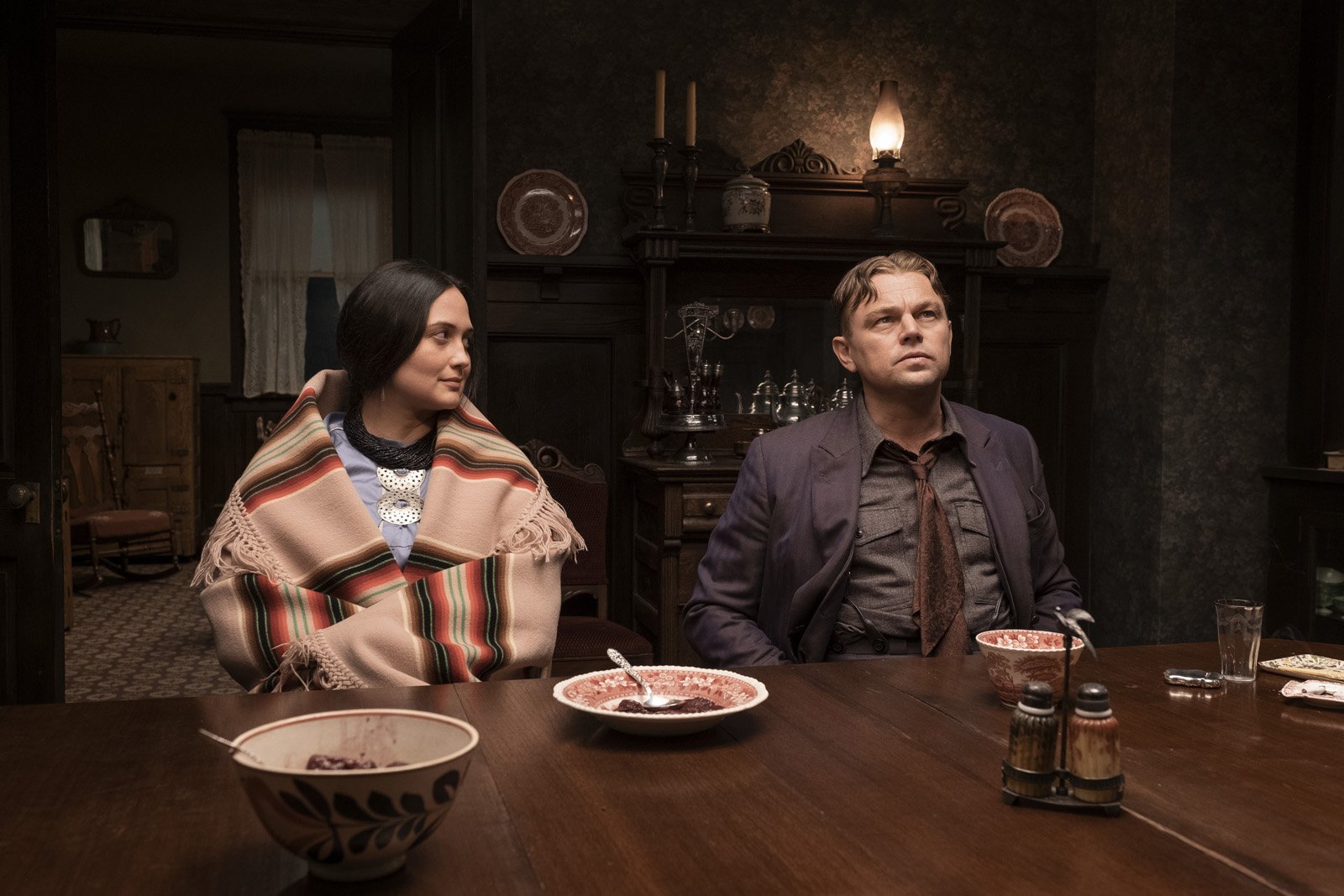
The Killers of the Flower Moon (2023) - Martin Scorsese, Leonardo DiCaprio, Lily Gladstone; book written by David Grann (2017)

I saw The Killers of the Flower Moon yesterday.

The masterful, 3 hour and 27 minute film from Martin Scorsese simultaneously disturbed and enlightened. It is a paean to a century before, an homage to a time long ago, and a morality tale about greed, based on the 2017 book of the same name by David Grann.

Scorsese crafted an elaborate framing device, in which the viewer is brought back into the 1920s. He used old-timey black & white vintage footage (newly filmed, of course) which displays a number of richly ornamented Native Americans gallavanting through the town of Fairfax, Osage County, Oklahoma, showing up their bling, stylishly posing for the cameras, and driving their Studebakers—or rather, being driven by their chauffeurs. Enter the Osage: a Native American tribe whose relocation to a reservation whose land was previously deemed worthless until the discovery of natural oil. Scorsese cuts to a scene depicting several Osage braves enjoying an oil-drenched dance under a geyser of the bubbling brew. Scorsese intercuts the old-style title cards, or intertitles, appropriated from the silent film era, explaining how the Tribe benefitted from the oil boom, resulting in the wealthy Indians above.

Enter the white man. We see several examples of obese hucksters trying to disenfranchise the Osage from their money, offering them expensive photographs, sham insurance deals, and generally any other shady way to steal their guaranteed oil money. Of the photographs, we see a couple take up the offer, and Scorsese privileges us with several of these historically preserved photographs of Osage Indians posing for the camera, in their spiffiest Western best. Our heroine (played by indigenous Montana actor Lily Gladstone) also appears in one, doubtlessly photoshopped onto an older photograph. The boomtown 1920s are in full swing.

We see Leo DiCaprio, in the huckiest (like huckster-hillbilly-golly-gee-shucks) role we've ever seen him in, exit the train for town, and proceed to watch, and throw a few punches in, some drunken brawl—until his Indian accomplish taps him on the shoulder, and brings him to the car. Darn, Leo was just getting use to the local scene.

For much of the movie, we see wide-eyed Leo imbibing everything around him like a kid's first time at a circus. The brawls, the street races, the scam artists, the money. It's all so exciting and new to him!

He is taken to meet his uncle, who wants Leo to address him as the King, just as he did as a child. The uncle, William King Hale, is quite the local magnate around town, financing schools, hospitals, and public works. He promises to take Leo (his name is Earnest Burkhardt) under his wing, and show him the ropes.

Leo's first job is as a cab driver, a chaffeur, but driving Studebakers. He picks up his soon-to-be love interest Miss Molly Kyle, an Osage beauty whom apparently many a man had his eye on. After three rides, Earnest is smitten by Molly, and apparently vice versa. She invites him into her house, she makes him some pudding, and they spend the rest of the evening sizing each other up while smoking and listening to the sound of the rain on the roof.

Apparently, however, the King has some interest in Leo (*cough* Earnest) settling down with Molly. After all, she has is one of four sisters who are all full-blood Osage, with all the oil rights and benefits that entails (*cough* money).

I won't ruin the rest of the plot for you, but essentially in the rest of the movie, we see Leo become a sort of Wolf of Oke Street. (At several points, we hear Leo say, I do love me my money, in a manner not unlike Brad Pitt's Lt. Aldo Raine, I do want me my Nazi scalps!.) By the time we're done, we're not sure whom to believe, who to trust; was Leo purely motivated by greed and evil, or were his actions manipulated by those around him? Apparently, Scorsese would have had the time run a lot longer, but — and this is one of the differences between the book and the film — he did not want the film to become like a police procedural/courtroom justice epic.

The film ends with the framing device of a cast of voice actors in the 1960s narrating to an enthralled audience, in Garrison Keillor-Praire Home Companion-style, what happened to each of the characters. We are shocked, we are disturbed; like the audience of the true crime mystery theatre, we are enthralled, we want to know more. But that's the point: maybe some of these things can never be explained.


I understand that delving into uncomfortable aspects of American history might not be everyone's cup of tea. However, The Killers of the Flower Moon offers far more than just a recounting of past injustices. The book, and the film, is a compelling narrative that transcends history; it's a captivating tale of mystery, conspiracy, and the birth of modern investigative techniques.

At its core, this book is a gripping true crime story, filled with intriguing characters, suspenseful plot twists, and a gripping quest for justice. David Grann, and Martin Scorsese, skillfully weaves together multiple narratives – the Indian murders, the birth of the FBI (called here the Bureau of Investigation), and the pursuit of truth – making it read like a gripping thriller rather than a typical historical account.

Picking up this narrative, you're not just confronting the uncomfortable past; you're also witnessing the evolution of law enforcement and investigative methods. The story, whose criminal justice side is more transparent in the book, introduces you to real-life heroes like Tom White, an FBI agent who navigates through a maze of deceit and corruption to bring justice to the victims and their families.

Moreover, The Killers of the Flower Moon prompts reflection on broader societal issues, encouraging readers to consider the implications of historical injustices on present-day circumstances. It provides an opportunity to better understand the complexities of American history and how these events have shaped our society today.

Reading this book offers a chance to broaden your perspective, fostering empathy, understanding, and a deeper appreciation of the struggles faced by marginalized communities. It's not just about confronting uncomfortable truths; it's about gaining insight, empathy, and a more profound connection to the shared human experience.

In essence, The Killers of the Flower Moon isn't solely about the discomfort of history; it's about the intrigue of a compelling story, the pursuit of justice, and the lessons we can draw from the past to create a better future. It's a captivating journey that will leave you informed, moved, and with a renewed appreciation for the power of uncovering hidden truths.

You can find the book here.

How an AI image generator interpreted Killers of the Flower Moon; try it here at Kittl.

Leonardo DiCaprio, Martin Scorcese, Wolf of Wall Street, Killers of the Flower Moon, Inglorious Basterds, Brad Pitt, Quentin Tarantino, Robert DeNiro,Money, Greed, Survival, Osage Indians, Fairfax, Osage County, Oklahoma, Lily Gladstone, indigenous representation

Saturday, August 12, 2023

Dreamin' Wild Movie Review (2023) — Beau Bridges, Casey Affleck, Walter Goggins, Zooey Deschanel

Brothers Donnie and Joe Emerson in the film Dreamin' Wild/Zurich Film Festival.
Walter Goggins on set/ MoviePlayer.It

Once upon a blue moon a songwriter comes out with tunes so slow, so cool, so soulful, that you cannot just help but immerse yourself. It starts infecting your soul, and you cannot help but tap your feet, sing along, and find yourself humming the song days later. The sound is timeless—is it the '70s, '80s, '00s retro? Songs so cool that Jimmy Fallon declares it's his favorite song he's been listening to.

But the only problem is no one's ever heard of the band or the music.

Until now.

Until some vinyl-scrabbing crategrabbers in a Montana thrift store, reached the bottom of the barrel, and came to surface with 1979's Dreamin' Wild by brothers Donnie and Joe Emerson.

No one had ever heard of this album, or the artists, until Seattle-based vinyl collector Jack Fleisher found it in the back of the stack. And loved it. And began posting it on vinyl forums online. And every vinyl freak decided they wanted a copy of their own.

It's 2011—and the music hadn't hit the airwaves for some 30 years. The indies and the collectors dig it. And then Jimmy Fallon declares that the soulful crooner Baby—sounding as if it emerged from any of the great '70s acts—is his favorite song of the year. And it begans infecting everyone's ear who gives it a listen. Baby gets recorded by several different artists.* Pitchfork writes a review of the album. Other outlets, including The New York Times want to do a story on it, but nobody has a copy of the album.

The reason? Almost all the original pressings—except for the few that had made it out of the house—were still sealed in boxes in the Emerson's parents' basement. It had been a commercial, and apparently artistic, flop for the Emerson's. But apparently not so any longer.

Light in the Attic, a Seattle-based boutique record label helmed by Matt Sullivan specializing in bringing to light and repressing long-forgotten records, had gotten their hands on Jack Fleisher's copy and wanted to give the album the proper release it deserved after 30 odd years.

All that happens, and more. The re-release, the media press, the legendary tour, but first Matt Sullivan must find the Emerson brothers—from their rural abode in Fruitland, in eastern Washington. After the commercial failure, Joe stayed on the family farm, toiling at woodwork and logging; while Donnie, who had dreamed of music his whole life, attempted to lead a moderately succesful attempt in the industry, but with no lasting impact—until now.

This is where Dreamin' Wild, the film, comes in. It features Casey Affleck, brother of Ben Affleck, as Donnie Emerson; his brother Joe Emerson is played by the perfectly cast, good-natured Walter Goggins (whose affable ah-golly-gee-shucks disposition, also on display in his role as a country preacher in The Righteous Gemstone's, shines through here.) Donnie's wife is played by the adorable Zooey Deschanel. His father is played by veteran actor Beau Bridges, and Chris Messina plays the talent agent, master of repressing Matt Sullivan. And the film's cinematography of sweeping fields, and mountains, a paeon to the rural life, evokes Terrence Malick, who is mentioned in the credits and was co-producer with this film's director (Bill Pohlad) on other films.

Having a dream come to fruition after 30 years. Planting a crop and getting no result. Crafting an album that no one hears. Wishing and wishing and hoping and dreaming until you can't dream anymore. The stress of life has squeezed every last dream out. You walk in a haze, having forgotten your childhood hopes. But then the phone rings. And everything changes. The years the locusts have eaten are over, and it was all a dream.

Your dreams weren't too wild. Your wildest dreams are about to come true; it's just around the corner. If it happened for Donnie and Joe Emerson, it can happen for you too.

Buy the album or DVD here.

Thursday, August 3, 2023

Tu B'av – the Jewish Day of Love and Romance?


Girls in white dresses dancing around a school in Israel
Girls in Israel dancing during Tu B'Av at school in Hadera. Wikicommons Creative Commons license

There is a Jewish holiday that I knew nothing about a few days ago. I knew the summer holiday of Tisha B'av (the ninth of the Hebrew month Av), but I had never heard of its cousin that follows six days later: Tu B'Av = the fifteenth of Av.

While Tisha b'Av commemorates the destruction of the Temple and resultant tragedies that have befallen the Jewish people, Tu b'Av celebrates marriage? A sort of Jewish Valentine's day?

According to the sages, there is a deep mystical meaning that arises with this often overlooked holiday.

In modern Israel, based on an ancient biblical practice, Tu b'Av is a time for the young girls to don white dresses and go out into the fields and dance to attract potential suitors. In modern Israel, it is time to celebrate, and encourage romantic love, with young people going on dates, flirting, and enjoying candelit dinners.

As we know, romantic love is a picture of divine love, and specifically of the love between G-d and Israel. G-d is depicted as the lover, and Israel is depicted as the beloved maiden, which is the rabbinic interpretation of the Song of Solomon. Christians similarly believe that it is the love between Christ and His bride, the Community of Called-out Believers.

According to the rabbis, however, Tu b'Av marks the time when the sins of Tisha b'Av are overturned. It is sort of a mini Day of Atonement, coming six days after the horrible destruction of Tisha b'Av.

The Tisha b'Av – Tu b'Av connection

According to the sages, the calamity of Tisha b'Av came about because the Israelite spies that entered Canaan gave the people a bad report of the land. This was seen as a denial of Go-d's deliverance of the Israelites. G-d had brought them into a beautiful land flowing with milk and honey, and all they could do was complain about it and say how bad it was! Thus, G-d instituted a ḥerem, a ban, of destruction on that day, which has continued to this very day.

But Tu b'Av was a reversal of the Tisha b'Av ban!

Because of the sin of the spies, the people cried that night (the night of Tisha b'Av). G-d accordingly instituted a punishment for them due to their lack of faith. He decreed that all males between the ages of 20 and 60 would die in the forty years wandering in the wilderness. The men accepted their punishment, and according to the sage Rashi, would dig their own graves on the night of Tisha b'Av each year. They would then lie down in their graves, and await until the morning. In the morning, Moses would go through the camp and cry out, Let the living separate from the dead! If the man was still living, he would arise and be thankful for his life. The dead would be buried in their spot.

This practice went on for 40 years every summer. Finally, on the 40th year of the wandering, on that particular 9th day of Av, something different happened. The men made their graves. In the morning, they awoke and not a single man had died! They assumed they had made a mistake in their reckoning, so they went back to their graves the next night, the 10th of Av. They woke up the next day alive! They were so pious, believing that they had still made a mistake, that they returned to their graves. They did this 6 nights in a row. Finally, on the 15th night of Av, they saw the full moon in the night sky, and realized that the entire male population had indeed survive unscathed. They realized that G-d had reversed the decree of judgement against them. The day, the 15th of Av, became a celebration of God's mercy and love!

Other occurrences on Tu b'Av

  1. During Temple times, wood had to be cut down from the trees. After the 15th of Av, the sun starts losing its intensity (in Israel), going into fall and winter. Accordingly, wood cut after this date could not be used for the Temple — because the lessened intensity of the sun might not dry it out enough and it could decay. The work of cutting all the wood for the Temple was thus completed on Tu b'Av. This great accomplishment made it a day of celebration!
  2. Jeroboam ben Nevat, the bad king of Israel, installed roadblocks forbidden Jews from making pilgrimage to G-d's Temple during Passover, Sukkoth, and Shavuot, the three pilgrim feasts. Hoshea, the last king of Israel, removed these blockades. This happened on the 15th of Av.
  3. When the Romans massacred the Jews of Beytar during the Bar-Kochba Revolt (132-136 AD/CE), they refused to let the dead bodies be buried for three years. When the Jews returned to the bury their dead, they found the bodies undecayed, and they buried them intact on the 15th of Av.

Tu b'Av in the Mishnah

In the Mishnah, the compilation of oral commentary on the Bible completed in the 2nd century CE by R. Simeon ben Jose, the sages discuss the tradition of Tu b'Av. On this day, it is recorded, the the young maiden of Jerusalem would go out and dance in the vineyards. This is recorded in Mishnah, tractate Taanit, chapter 4, section 8:

וּבְנוֹת יְרוּשָׁלַיִם יוֹצְאוֹת וְחוֹלוֹת בַּכְּרָמִים

They would go out dressed in white clothes, so that no one could distinguish between rich and poor and judge between them, causing embarassment to any.

שֶׁבָּהֶן בְּנוֹת יְרוּשָׁלַיִם יוֹצְאוֹת בִּכְלֵי לָבָן שְׁאוּלִין, שֶׁלֹּא לְבַיֵּשׁ אֶת מִי שֶׁאֵין לוֹ.
Literally, When the daughters of Jerusalem would go out in white garments, borrowed (from each other), so that no one would put to shame whoever did not have it

They would dance in the vineyards, and the young men would come to watch.

וּמֶה הָיוּ אוֹמְרוֹת, בָּחוּר, שָׂא נָא עֵינֶיךָ וּרְאֵה, מָה אַתָּה בוֹרֵר לָךְ. אַל תִּתֵּן עֵינֶיךָ בַנּוֹי, תֵּן עֵינֶיךָ בַמִּשְׁפָּחָה. שֶׁקֶר הַחֵן וְהֶבֶל הַיֹּפִי, אִשָּׁה יִרְאַת ה' הִיא תִתְהַלָּל
And what would they say (to the boys)? Young man, lift up now your eyes and regard what you will choose for yourself! Do not give your eyes to Beauty, give your eyes to Family! [That is, a good family] Grace is deceptive, and beauty is vain. A woman who fears Hashem, she shall be praised! [Prov. 31:30] They also quoted [the next verse]: Give to her from the fruit of her hands! Let her deeds be praised in the gates!

According to one interpretation, the girls from good families but without beauty would say Pay no attention to Beauty, but pay attention to Family!, while the girls with no family or looks would say, Grace is deceptive, and beauty is vain. But a woman who fears Hashem, she shall be praised! The point is, though, that each was equal, and the boys could only choose the ones that was best for them, all things considered.

Tu b'Av in the Bible

In the Bible, in Judges 21, this custom of Tu b'Av is briefly mentioned, indicating that it had ancient precedent. The Tribe of Benjamin had been, effectively, cut off from Israel. They had no wives. So the elders of Israel gave them a plan: they were to go to the Tu b'Av vineyard dance and take wives for themselves. This effectively reinstated Benjamin into the fold of Israel, and permitted inter-tribal marriages.

19 וַיֹּאמְר֡וּ הִנֵּה֩ חַג־יְהֹוָ֨ה בְּשִׁל֜וֹ מִיָּמִ֣ים ׀ יָמִ֗ימָה אֲשֶׁ֞ר מִצְּפ֤וֹנָה לְבֵֽית־אֵל֙ מִזְרְחָ֣ה הַשֶּׁ֔מֶשׁ לִ֨מְסִלָּ֔ה הָעֹלָ֥ה מִבֵּֽית־אֵ֖ל שְׁכֶ֑מָה וּמִנֶּ֖גֶב לִלְבוֹנָֽה׃
And they said, Look, the annual feast of YHWH is being held at Shiloh. (It is north of Beth-El, east of the highway going up from Beth-El to Shechem; and south of Levonah.)
20 וַיְצַו אֶת־בְּנֵ֥י בִנְיָמִ֖ן לֵאמֹ֑ר לְכ֖וּ וַאֲרַבְתֶּ֥ם בַּכְּרָמִֽים
And they instructed the sons of Benjamin, saying, Go and lie in wait in the vineyards!
21 וּרְאִיתֶ֗ם וְ֠הִנֵּ֠ה אִם־יֵ֨צְא֥וּ בְנוֹת־שִׁילוֹ֮ לָח֣וּל בַּמְּחֹלוֹת֒ וִֽיצָאתֶם֙ מִן־הַכְּרָמִ֔ים וַחֲטַפְתֶּ֥ם לָכֶ֛ם אִ֥ישׁ אִשְׁתּ֖וֹ מִבְּנ֣וֹת שִׁיל֑וֹ וַהֲלַכְתֶּ֖ם אֶ֥רֶץ בִּנְיָמִֽן׃
As soon as you see the daughters of Shiloh going out to dance in dances, let each man jump out of the vineyards and catch for themselves his wife from the daughters of Shiloh. Then take off for the land of Benjamin!
23 וַיַּֽעֲשׂוּ־כֵן֙ בְּנֵ֣י בִנְיָמִ֔ן וַיִּשְׂא֤וּ נָשִׁים֙ לְמִסְפָּרָ֔ם מִן־הַמְּחֹלְל֖וֹת אֲשֶׁ֣ר גָּזָ֑לוּ וַיֵּלְכ֗וּ וַיָּשׁ֙וּבוּ֙ אֶל־נַ֣חֲלָתָ֔ם וַיִּבְנוּ֙ אֶת־הֶ֣עָרִ֔ים וַיֵּשְׁב֖וּ בָּהֶֽם׃
The sons of Benjamin did so. They carried off women, according to their numbers, from the dancers whom they had seized. They took and they returned to their inheritance. They built their cities, and they lived in them.

This was a day of rejoicing for Benjamin, because Benjamin was added back into the fold of Israel, and was allowed to intermarry any other tribe. Israel was united, in some small sense.

In a mystical sense, Tu b'Av looks forward to the day when all Israel's sins will be remitted, and the Messiah will return and catch us up together with him in the air. The Messiah will take us to his abode, and it will be a day of rejoicing and feasting and celebration. There will no longer be any tear. All the calamity of Israel will have ceased. And the marriage supper of the lamb will commence.

Sources:

  • The Mishnah Elucidated: A Phrase-by-Phrase Simplified Translation with Basic Commentary Schottenstein Edition, edited by Rabbi Nosson Scherman and Rabbi Meir Zlotowitz; ArtScroll Series Mishnah Vol. 6: Tractates Taanis / Megillah / Moed Kattan / Chagigah (Rahway, New Jersey: Mesorah Publications, 2015)
  • Rabbi Chaim Richman, Parashat Eikev: The Circle Dance of Tu B'Av, Jerusalem Lights - Rabbi Chaim Richman YouTube.
  • Sefaria.org (for the Hebrew texts)

Saturday, March 27, 2021

The Planned Obsolescence of Media

Media and electronic devices have a planned obsolescence. Now by media, I am excluding, in this instance, print books; I am specifically referring to when media is accessed through electronic devices, and physical audio-visual materials.

It used to be, one could go in the store, and find a physical item one was looking for. Anymore, if one does venture into the store, one is hard pressed to find a copy of what one is looking for. Instead, the retailer will tell you to order it online. Now, I came into the store to the find the item. I did not come into the store to be told to order it online. If I had, I would have done that first.

Anymore, however, the absence of items/copies of what one is looking for is pushing people to order online even if they don't want to. Sometimes, I'll ask the kind retailer (if that is his business) to order it for me directly and I'll pick it up at the store. I would rather him or her do it than me order it online, on principle's sake. I would save money if I ordered on Amazon. But I refuse to support giant techopolies whose vested commercial interest is in selling my data—and me—to outside vendors, and who are achieving world domination at a greater rate every day, digitally if not in the future physically.

To give a silly example, I went into the hardware store to find some batteries for a stopwatch that stopped working. The sales rep knew exactly what batteries they were by name/model #, however, when we got to the aisle, they were nowhere to be seen. Not only were they out of stock, but apparently, there was no place for them either. I had him order a set for me, which turned out to be around $8. However, I later looked on Amazon and I could have got them for $4.

For an old person to make such claims is a rant. For me, a young, tech-capable man who knows all about computers, programming languages, is just ludicrous. Or so they say.

I have the right to live in a world where I can find something at the store. I'm not upset that I have to order it through the store. In fact, I want to support the store, and I'd rather order through them. I am more upset by the fact that using the store is almost become the alternative option, the weird option, the backwards option.

Physical Media

It is getting hard to find physical media—CDs, DVDs, VHS, Blu-ray, Cassette tapes, LPs, LaserDiscs, and whatever other format imaginable. There was so much joy for me in finding these physical items, holding an album in my hand, poring over the liner notes. Digital doesn't cut it.

Let's say you want to watch a movie, maybe an older one. You have several options: (1) see if your local library carries it. They may or may not, but are often glad to order it for you. (2) Go to a store. The likelihood of you finding it at any store is pretty minimal. Walmart, Target etc. only have the latest releases. There are no video stores any more, so good luck with that. A pawn shop or thrift store is hit and miss. (3) Go online. Here you can try to find it on Craigslist, or maybe Amazon if you choose. Amazon will most likely have a copy listed. You can also pay Google or YouTube or Apple to stream it/rent it. I refuse to pay any money for a streamed copy of a movie that is going to buffer over my slow internet on a tiny screen. Others certainly disagree. It may be likened to attending a movie; however, a theatre is a completely different experience, namely, the anticipation of driving there, waiting in line, buying a ticket, ordering popcorn, and sitting in a darkened room with many other enjoying the same spectacle. The process of sitting at a screen may be similar, but I have not yet been willing to pay for a rented-streamed movie, whereas I'll gladly pay $12+ for a movie theatre.

The Hunt

I've been on a strange hunt. I've been searching for a MacBook (I love Macs—don't shoot me) computer with a DVD drive. Apple last made those in 2012. So I am effectively looking for a 9+ year old computer, which sounds very illogical. However, not is there not anything wrong with such computers, but they work just fine, can run the latest Mac OS, or if one wants Windows 10 or a 64-bit/32-bit Linux distro.

Apple has forced me to make it harder to watch DVDs. I am not going to stop watching DVDs any time soon, nor ripping my CD collection. So take that Apple. Yes, I can get an external drive. But I want an internal drive. So I will continue to search for my golden, DVD MacBook until the cows come home or Jesus returns. Whichever is first.

So all y'all can take the latest spotify, streaming, pay-all-your-money to Netflix and Hulu and every other company and service out there, while I'll be quietly enjoying my DVDs and records and LaserDiscs and whatever other physical media I can find. My paradise.

Tuesday, January 12, 2021

Hollywood vs. America by Michael Medved review

Hollywood vs. America

How many parents have struggled to find a movie that they feel comfortable taking their kids? Or children choosing a movie to watch without embarassing their parents? Former film critic Michael Medved addresses these issues in his 1992 book Hollywood vs. America.

Medved essentially shows how Hollywood continues to churn out films that reflect values and messages that fail to resonate with American citizens. These movies benefit Hollywood directors' own sense personal mission, but do even generate box office returns. Essentially, America is ignoring these movies. Because these movies appear to attack American values.

Medved organizes his Hollywood expose into five parts, divided into several categories. Medved argues that Hollywood produces movies that attack traditional values, attack religion and clergy, attack the family, attack traditional morality, and promote violence and gore.

This book is not just a scare tactic. Medved has intimate knowledge of Hollywood, having viewed a half-dozen movies every week and befriended many Hollywood elite. What is impressive is his vast array of evidence, which includes plot points from films and box office and admissions data.

For his first point, that Hollywood attacks religion, Medved trots out a plethora of priest-bashing flicks. These include The Runner Stumbles (1979), Monsignor (1982), Agnes of God (1985), Heaven Help Us (1985), The Penitent (1988), Last Rites (1988), We're No Angels (1989), Nuns on the Run (1990), The Godfather, Part III (1990), and The Pope Must Die (1991). Nearly every one of these show priests abusing their power or even murdering their parishioners -- which should be stated, the latter is not known to have happened in real life. Medved exhibits a few films that are positive towards individual clergy, but still take a dim view of church hierarchy. These ambivalent films include True Confesions (1981, Robert De Niro), Mass Appeal (1984, Jack Lemmon), The Mission (1986, Jeremony Irons and Robert De Niro), and Black Robe (1991). One could also add The Blues Brothers to this list, which depicts two men who engage on a "godly" mission but depicts horrifying nuns.

What is incredibly interesting is that Hollywood directors have no clue that faith is a large part of American life. Medved recounts how he would ask industry members at parties what percentage of people attend church or synagogue in America, and they would typically respond less than five percent. In fact, Medved points out, the number is closer to 40%, according to a January 1992 from Newsweek. Seventy-eight percent pray regularly, and more than 90% believe in a personal deity. Only 4% of Americans were totally nonreligious: religion is not a part of their lives, they do not attend church, and have no religious affiliation. When presented with this evidence, Medved explained, Hollywood literally cannot believe it, because everyone with whom they interact is irreligious as well. According to a 1983 Public Opinion survey, 45% have no religion and 93% of Hollywood seldom or never attends religious services. One television producer addmitted he did not know a single director, writer, or actor who attended church or synagogue. While these numbers have certainly changed in the thirty years since this book's publication, they show how vast the gulf between Hollywood and the rest of America. (According to 2014 survey data from the Pew Research Center, 36% of Americans attend religous services regularly, 55% of Americans pray daily, 75% of Americans identify as religious, and 25% identify as irreligious. The irreligious number has grown tremendously, while church attendance has only dropped by 4% since 1992.)

Hollywood also likes to portray Bible-believing Christians in a certain way. In Crimes of Passion (1984), Children of the Corn (1984), Poltergeist II (1986), The Vision (1987), Light of the Day (1987), Salvation! (1987), Pass the Ammo (1988), The Handmaid's Tale (1990), The Rapture (1991), At Play in the Fields of the Lord (1991), and Guilty as Charged (1992), the films portray Christians and pastors as crazed, apocalyptic murderers. Anyone who took these films seriously would have a seriously skewed view of American Protestants.

The next category that Medved examines is the family and morality. It seems that Hollywood does not show a single happily married couple. One sitcom of the 1990s, Married with Children, shows a married couple who are constantly having problems and whose love life is as passionate as geriatric bowling night. Film and television show a constant barrage of people having sex before marriage, outside of marriage, but not a single example within marriage. Medved is not trying to be a prude but wishes that Hollywood could at least show happy married couples. Contrary to the myth that 50% of people will get divorced (which was simply the number of marriages in 1981 compared to the number of divorces in that same year), 90% of all marriages survive, according to Louis Harris's 1987 book Inside America. In addition, 80% of Americans were satisfied with their marriages and would marry the same person again. When Hollywood pushes the idea that marriage is a death trap and that only sex outside of marriage and adultery is exciting, they are not reflecting the actual facts and values of American life, but their own values, which stand outside of the mainstream.

In the chapter Encouraging Illegitimacy, Medved illustrates a series of shows in which the main character not only has a baby outside of wedlock but even have babies via artificial insemination. While it is interesting for shows to explore issues like this, when it becomes so widespread in Hollywood as Medved shows that it does not present any alternatives, it starts to become suspect. When the former alternative lifestyles become mainstream, you know it's Hollywood. All sociological evidence shows that children reared in single-parent families or families without a father are more likely to fail school, commit crime, and be incarcerated, a rabid epidemic assaulting the black community. While it's fine for Hollywood to explore gritty situations, it seems irresponsible of them to only show non-nuclear and non-traditional families, which are still the minority in America.

Another idea that Hollywood presents is that kids know best. Anyone can see this principle in practically any film, it shouldn't be controversial to prove that. Basically, the parents are complete bimbos who need their children to enlighten them or show them the way. In some cases, the parents are evil and abusive. While the kids-know-best idea seems harmless, it is the cumulative effect of nearly every film without stop that corrodes American youth's respect for parents and authority (within reason, of course). In reality, most parents do know better than their children and want the best for them. Children of course teach their parents things too, but most parents truly do have their children's best interests at heart.

Finally, Hollywood makes films that seem to be anti-American in values. In 1991, the current war was the Gulf War, which was wildly popular by the vast majority of Americans. The fact that Hollywood did not have a single cinematic depiction of this war shows how out of touch Hollywood is with mainstream America. Of course it's fine to have opinions, but Hollywood would rather force anti-war messages on patriotic Americans than reflect what Americans value (patriotic heroes - this may have changed by now, with a gamut of films like American Sniper, Zero Dark Thirty, and Chris Hemsworth in 12 Strong).

Medved points out that all the films he cites which exhibited content that did not resonate with Americans were not box office successes. Put another way, Americans did not turn out for films which showed content they did not like. The few times Hollywood produced family friendly and G/PG films in this timeframe were massive successes, indicating that audiences showed up. So if Hollywood made bookoo bucks on family films and made pittances on films with rape, murder, and mayhem, the obvious question is why didn't they go where the money was?

In Part 6, Medved seeks to answer that question. He outlines the history of Hollywood and their ideas which brought them to this day. In 1922, postmaster general Will H. Hays created a code by which studios agreed to abide. The Hays Code prohibited displays of sex/nudity, obscene language, gratuitous violence, ethnic slurs, priest-bashing, and mocking any religion, among other things. In 1930, an Hays Office was established, which reviewed every film and gave it a Motion Picture Seal of approval. In 1966, however, Jack Valenti became president of the Motion Picture Assocation of America and removed the Hays Code. Finally, the embattled Hollywood directors were free from the crushing weight of the code, despite the fact that the greatest directors of the all time -- Alfred Hitchcock, Howard Hawks, John Ford, Billy Wilder, George Cukor, Frank Capra, and Orson Welles -- produced magnificent films under the Hays Code.

Medved convincingly shows that 1966 was a pivotal year. In 1965, the Academy Award went to The Sound of Music. In 1969, it went to the X-Rated Midnight Cowboy. Intriguingly, attendance plummetted. Since 1953 (after the invasion of television), movie audience stayed fixed around 40-49 million attendees per week (before TV, in 1948, it had been at 90 million). In 1965, still under the Hays Code, attendance was at 44 million a week. In 1969, it plummeted to 17.5. What could have happened? Since then, attendance never went above 23 million (except in 1984), but stayed around 18-19 million. Attendance had effectively halved. After this, grindhouse and exploitation films, which had previously been completely sidelined, began to place elements in major Hollwyood releases. To put the data more convincingly, out of 1,010 films released between 1983 and 1989, all G films grossed a median of $17.3 million. PG titles earned a median of $13 million. For PG-13 releases, the median was at $9.3 million, and for R films, the median gross box office was $8.3 million (less than half the box office of G). What these data show is that audiences respond more favorably to films they can take the whole family to, which of course generates more ticket sales than that of a single stag going to a late-night erotic film alone.

I do not have children, so it's hard to know what movies I would allow my kids to see, but I can assure you that Texas Chainsaw Massacre and Saw II will not be allowed. I was exposed to violent films like Kill Bill and The Matrix at a young age, and I turned out okay. But what Medved shows is it's not a single movie here, a single movie there, it's the cumulative effect of all the films which reflect values which do not seem to align with the vast majority of Americans, who value traditional values (things like patriotism, respect for elders, family, treating people well). In other words, common decency. An obvious critique of Medved's work is he seems to read these films too literally. Many directors see their work as satire or political commentary or social release -- they are fantasy, and if we didn't have violent films, we would all kill each other. However, such arguments fail to take into account that vast majority of Americans are not violent and do not want to kill others (except perhaps in self-defense). Therefore, it seems irresponsible for Hollywood to be churning out films with values we do not appreciate. How many times have you had to cover your kid's eyes? (I know it's happened to me.) It would be easier if one didn't have to do that. The answer is clear: if you make movies for the whole family, the people will come. One also wonders how much has changed since 1992. I think that faith has become more prominent in Hollywood, with shows like God Friended Me. Violence has definitely increased (Inglourious Basterds, John Wick, various war movies etc.). Sex is in nearly every show or movie, so that hasn't changed. Interestingly, when you apply Medved's thesis to 2019, it holds true: the top box office hits were films that were not facile but that everyone could attend without fear of objectional content. Avengers Engdame, $858.3 million, yes it was dark, but it was still family friendly. The Lion King, $543.6 million. Toy Story 4, $434 million. Frozen II, 430.1 million. Captain Marvel, $426.8 million. Spider-Man: Far from Home. Star Wars Rise of Skywalker. Aladdin. The same could be said for 2018 (with the exception of Deadpool 2). Medved is right: build a family movie, and they will come. (However, the bigger problem here is these are all fanchises and series). Maybe what Hollywood needs is not just to merely follow family-oriented formulaes but a revival.

Book link

Sunday, October 18, 2020

Sex and Marriage in the Bible

Sex and Marriage in the Bible

Many people seem to think that God does not care about sexual immorality. Rather, the opposite is true, he does care what goes on in the bedroom. This concern is not because he is prudish or like some cosmic Santa Claus, snooping on what we are doing, but rather because he loves his children and wants the best for us. In short, sex in marriage follows God’s law and allows God’s blessing in our lives. This article will explore some of what is said in God’s law, then the New Testament, and how it applies today.

Sex and Marriage in the Torah

God stated his instructions for life, the universe, and everything, in the Torah (Hebrew, instruction). God revealed the Torah to Moshe on Mt. Sinai after delivering the children of Israel from bondage in the land of Egypt. The Torah reveals God’s guidelines for his covenant community.

Most of what the Torah says about sex and marriage is in the books of the Torah called Leviticus and Deuteronomy, specifically chapters 18 and 22/24, respectively. Leviticus is a document that lists the cultic requirements of God’s people, that is, what God expected of those who followed him. Deuteronomy (from the Greek word meaning second law) is Moshe’s retelling and re-extrapolation of the law, right before God brought his people into the land of Israel and Canaan.

Leviticus 18

Leviticus 18 lists all the prohibited sexual relations in which God did not want his people engaging. These are listed with the formula you shall not uncover the nakedness of…. Most of these are prohibitions against incest. Among other examples of incest, God in Leviticus prohibits sex with one’s sister (and half-sister), a mother and a daughter at the same time, two sisters at the same time, a women experiencing menstruation (called niddah in Hebrew), humans and beasts, and two men sleeping together. These relations oppose God’s plan for marriage, which is stated at the end of the creation narrative in Genesis 2:4, where God states, Therefore, a man shall leave his father and his mother and cleave to his wife, and they shall become one flesh. The reason God did not want his people engaging in these practices is because they violate his standard of a one-flesh union, which he designed to bring the most blessing in life. God wants people to know the relationships that will bring life.

Deuteronomy 22/24

In Moshe’s retelling of the Law in Deuteronomy 22, starting at verse 13, he divided sexual relations into several categories: a married women who was found to not be a virgin, the wife of another man, a betrothed virgin, and a single virgin. He also divided them into actions that happened in the city versus the countryside. We will go through each in turn; I will provide summaries, from which the reader can study the text for herself. One must recognize that these are hypothetical, legal situations, from which one must draw broader conclusions.

A (verses 13-21) A man marries + non-virgin girl = punish the girl.

In this unfortunate situation, the man finds that the girl he married is not a virgin. While the particular method this was found out may be barbaric, the standard which we can extrapolate from this ancient law is that God does not approve of whoring in one’s father’s house (victims of rape, abuse, assault, and incest are not in the purview of this category and God has grace on victims; any Bible preacher who claims this refers to such victims should be denounced from God’s word). God sees intentional multiple sexual partners as a violation of his standard stated in Genesis 2:4, and this passage opposes such behavior.

B (verse 22) A man + a married women = punish both.

If a man sleeps with a women married to another man, that is the definition of adultery, which is also listed in the Ten Commandments. This behavior, under Mosaic law, requires the death of both parties, so as to purge the evil from amongst you. While we may not execute adulterors today, this verse shows how seriously God considers the violation of the marriage covenant.

C (verse 23-25) A man + an engaged/betrothed virgin + in the city = punish both

The linch pin of this legal case is that a man sleeps with someone else’s fiancee in the city. The assumption is that since it happened in the city, she may have been able to cry out and halt the assault. Since she did not cry out, she must have consented. Again, this hypothetical, legal case should not be used to condemn those who were assaulted and unable to scream. Back in those days, where neighbors were close and families lived together, it must have been hard to find a truly private place; therefore, any assault would have been seen or heard rather quickly; since she did not resist or call attention in such a scenario, it must not have been an assault in the first place, but a predetermined liaison between two consenting parties. Today, with our thick walls, dense urban jungles, and dark alleys, it may be harder to draw attention to an assault.

D (verses 25-27) A man + an engaged/betrothed virgin + in the country = punish the man

This passage should clearly show that God does care about the victim of rape. In this scenario, a man rapes someone’s fiancee in the countryside. Since there was no one to hear, we cannot know whether she consented or not. Therefore, the assumption is that the action was an assault. You shall do nothing to the young woman; she has committed no offense punishable by death. Rather, the man is tried as a rapist.

E (verses 28-29) A man + a virgin = marry her

In this final, hypothetical case, a man finds a single virgin (that is, not betrothed or engaged to anyone). The man has violated her, whether she consented or not. If the law allowed her to marry another man, we would end up with situation A, above. Rather, the law required that the man marry her. She shall be his wife, because he has violated (others, humbled) her. He may not divorce her all his days. Lest someone say that this requires marrying one’s rapist, Jewish law required that the woman had the final say in the marriage: she could refuse him. Rather, the standard is how highly God considered the sanctity of marriage: that playing around with sexual intercourse should lead to marriage.

Practical

In ancient Israel, there were three ways to finalize a marriage. These principles were reaffirmed and stated in the tractate of Jewish law called Mishnah Kiddushin 1:1. These three are through money (i.e., a token of marriage, e.g., a ring), through contact (kesubes, with a ketubah), and through sexual intercourse (kiddushin). All three are commonly fulfilled, but only one is necessary to fulfill a binding marriage. These standards are a distillation of what God says in his word. Kiddushin comes from the Hebrew word kadosh, or sanctified, set apart, or holy. Sex is so holy that it sets the couple apart as a unified whole. God considers sex as so sacred that it binds two people together (this can be inferred from Gen. 2:4, as well as situation E, above). When two people have sex, they are bound. Since in God’s eyes, bound people are married, therefore, they should formally and legally recognize it.

In early America and England, pastors to finalize a marriage were in short supply. A couple would want to get married, and declare their intentions to the local community (usually posted as the banns on the church door, and left up for three weeks for anyone to see). Since the vicar only came by once a year, the community would allow the couple to live in marriage until the vicar solemnified the covenant that was already sanctified by the sexual act. This was a legal marriage in the eyes of the community, and in the eyes of God, because it was understood that this covenant was a commitment and not just having sex to break up a week later. This was a serious and completely binding marriage. The old Christmas song mentions this custom: In the meadow we can build a snowman Then pretend that he is Parson Brown He’ll say, Are you married?, we’ll say, No, man But you can do the job when you’re in town. This song reflects the practice of how the vicar/parson/or priest would finalize the unions that had already been consented to in the community.

In Scottish common law, also based on Biblical principles, a man and a woman could declare their love and commitment to each other, and then have sex. Church law (canon law) recognized this practice, known as handfasting, as a valid and sanctified marriage. (However, even though the Catholic church allowed the practice, they disapproved of it, wanting to maintain control over marriage.) In Kiddushin, a couple can be married by having sex; the same idea is found in the Scottish common law practice of handfasting.

There are many couples today who are living together and not married. The difference between such cohabitating unions and Kiddushin (God’s standard), is that in the former there is no clear commitment to covenant. People can break up and move in and out at will. There may be some couples who say vows to each other with this intention of commitment, which would be seen by God as valid, but most probably do not have that sacred understanding; then the question is, Why not just get married? In our modern society, if two people want to have sex and live their lives together, there are no reasons to not get married. In fact, there are many financial incentives, including tax reasons, to be a married couple. In addition, a marriage provides a sort of insurance policy that the person won’t just leave you, although this understanding is being eroded by divorce and adultery, which is all the more reason to have a sacred understanding of marriage, as God reveals in his word.

In modern (American) society, a marriage is solidified with two things. Spiritually/emotionally and legally. Spiritually, a couple exchange vows; and then legally, they receive a marriage license from the local authorities. God sees the marriage as valid without the legal license, but society does not, and there is no reason to not get the license. Some libertarians would maintain that government cannot authorize a marriage, but I see it as government sealing an action that the couple and God have already sealed. However, one should see that step as less of a government intrusion and more of a reflection of the Kiddushin practice of money and contract, which finalize a marriage. There are precious few reasons why a couple should not get a marriage license, and convenience and cohabitation is not one of them. Even in this time of covid, when people cannot gather, it is beautiful to see couples going to the local courthouse and clerk to get married. Their commitment to marriage is admirable. And, of course, the wedding ceremony is not necessary; but it is a nice time for people to recognize the already binding marriage (many couples sign the legal license during the wedding, which may be seen as a parallel to the ketubah; Jewish couples sign a license and a ketubah).

Sex and marriage in the New Testament

If you only think such ideas were for ancient times, let me tell you that Jesus and the New Testament re-affirm the godly principles of marriage revealed in the Torah.

Jesus himself said that if anyone looks at a woman with lustful intent, he has already committed adultery with her in his heart. This extremely high standard shows how serious God takes the sanctity of marriage. Mere lust is a violation of marriage. Jesus’s statements are deliberately hyperbolic to prove a point.

One of Jesus’s follower, Rabbi Shaul (his Roman name was Paulus or Paul), taught that sex bound a couple together. In his epistle to the kehille (community) at Corinth, Shaul wrote:

don’t you know that he who is joined to (holds fast to) a prostitute (pornei) becomes one body with her? For, as it is written, The two shall become one flesh. But he who is joined to the Lord becomes one spirit with him. Flee from porneia (harlotry, sexual immorality). Every other sin a person commits is outside the body, but the sexually immoral person sins against his own body.
Paul knew that sex binds, it’s not just bodies, it involves one’s soul as well, and that binding oneself to a prostitute was a spiritual act of binding souls. He drew the analogy between uniting with the Lord and uniting with a prostitute; both are spiritual acts. God wants us to be bound in soul to him, not bound in soul to prostitution. Paul knew the one-flesh teaching of Genesis and taught it from heart.

In a letter to the kehille of Jewish Christians (Hebrews), Paul taught that God considered the marriage bed with utmost regard.

Let marriage be held in honor by all, and let the marriage bed be undefiled, for God will judge the pornei (sexually immoral) and the adulterous.
Lest people think that God does not, Paul taught that he did and that God would judge the immoral, just as the Torah of Moshe required that people be punished for violating these standards.

Conclusion

God considers sexual immorality a problem for two reasons. Marriage is the foundation of society, and two, it is a symbol of God’s relationship with his people. God wants human societies to flourish, and upholding marriage is the best way to do so. People cohabiting leads to break ups, broken hearts, and does not contribute to economic security and the secure upbringing of children. Only a secure marriage can do that. Secondly, marriage between humans is a reflection of God’s marriage to his people. God does not want his people "whoring" with other gods and idols; he wanted a monogamous union with himself. Violating God’s standards of marriage is ultimately violating God himself. As a couple are bound together in marriage, planning to never leave each other, so God plans to never leave or forsake us. He gave us a wedding covenant (the rabbis state that the Torah was his ketubah), and he promises to take care of us. The wedded relationship is a symbol of what God did for us. And if you find yourself in a different standard than this, know that God is eager to take you in and is only a prayer away. These laws were not from a prudish god, but were designed for our benefit, so that we could live life with God and each other in a state of human flourishing.